If you’ve ever wandered the aisles of a machine shop, watched a factory line hum to life, or even fixed a broken appliance in your garage, you’ve encountered the unsung heroes of manufacturing: general components. As a supplier who’s been in this space for over a decade, I’ve seen firsthand how these seemingly simple parts can make or break a project, a product, or even a business. Too often, people write them off as “commodities”—generic pieces that all suppliers can offer, identical no matter who you buy from. But that couldn’t be further from the truth. The best general components aren’t just parts; they’re the backbone of reliable, efficient, and cost-effective operations, and they have distinct features that set them apart. Today, I want to pull back the curtain on what makes high-quality general components work, and why that matters for every business that depends on them. General Components
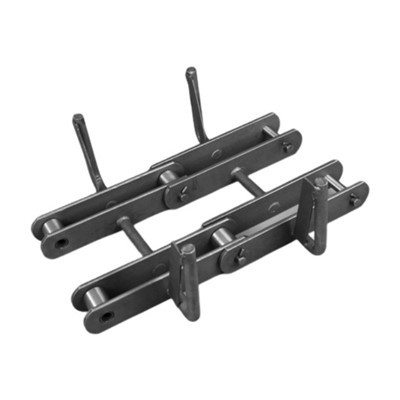
Let’s start with the most foundational feature: versatility. General components are designed to fit seamlessly into a huge range of applications, not just one niche use case. Think about a standard hexagonal bolt, for example. You’ll find it holding together a farm tractor, a medical device, a construction crane, and a backyard swing set. When we source or manufacture bolts for our customers, we don’t make them for a single industry—we engineer them to work across automotive, aerospace, consumer goods, agriculture, and industrial equipment. That versatility isn’t an accident. It comes from strict adherence to universal standards, like ISO or ANSI specifications, which dictate exact measurements, thread patterns, and material properties. For our team, versatility also means offering a range of finishes: zinc-plated for corrosion resistance in outdoor settings, stainless steel for food or medical environments where cleanliness is non-negotiable, and black oxide for applications where aesthetics or lubricity are key. A customer building packaging machinery might need a bolt that works in a humid warehouse; a customer making industrial kitchen appliances might need the same bolt to withstand repeated washdowns. Versatility means one part that can do both, instead of a customer having to stock 10 different parts for 10 different uses. That’s a huge win for our buyers, who value reducing inventory complexity and keeping supply chains lean.
Next, consistency. This is the feature that separates a great supplier from a mediocre one, and it’s the reason so many of our customers have worked with us for years. General components are only as good as their ability to perform the same way, every single time, no matter how many you order or when you order them. Let’s take bearing housings, another core general component we supply. If a production line runs 24/7, 365 days a year, even a tiny variation in a bearing housing’s inner diameter can cause friction, overheating, and unplanned downtime. A single hour of downtime on a mid-sized manufacturing line can cost tens of thousands of dollars. That’s why we test every batch of our bearing housings for dimensional accuracy—using calibrated tools that check measurements to within thousandths of an inch—before they leave our warehouse. Consistency also means reliable lead times. We know that when a customer’s line goes down, they don’t have time to wait 6 weeks for a replacement part. That’s why we keep 90% of our most popular general components in stock, ready to ship within 24 hours. I’ve seen customers jump between suppliers because one batch of pins was slightly too short, or a batch of connectors failed a simple continuity test, and that’s a mistake they never repeat. Consistency isn’t just a buzzword for us—it’s the foundation of trust, and it’s the feature our customers tell us matters most.
Durability might seem like a given for parts that hold machines together, but it’s a feature that’s often misunderstood when it comes to general components. Unlike specialized parts made for a single, controlled environment, general components have to perform reliably across a huge range of conditions: extreme heat in a steel mill, freezing cold in a refrigerated warehouse, constant vibration in a delivery truck, or corrosive chemicals in a wastewater treatment plant. That means durability isn’t just about being strong—it’s about being adaptable. When we select materials for our general components, we work closely with our customers to match the material to their specific operating conditions, not just the lowest possible cost. For example, a customer mining lithium in a harsh, dusty, acidic environment might need our custom-grade carbon steel fasteners, coated to resist corrosion and abrasion, instead of a generic bolt off a shelf. Another customer making electric vehicle charging stations might need our high-strength aluminum brackets, which are lightweight but can withstand years of outdoor exposure to rain, UV rays, and temperature swings. We also test durability in our in-house lab: we run thousands of cycles on our springs to make sure they don’t wear out before their rated lifespan, we subject our gears to torque tests to ensure they can handle heavy loads, and we expose our connectors to salt spray for hundreds of hours to confirm they resist rust. General components don’t get to be “general” if they fall apart when put to work.
Compatibility is another key feature that’s often overlooked until it goes wrong. In today’s interconnected manufacturing world, products and machines are built from parts supplied by dozens of different vendors, often across continents. General components have to play nice with all of them, no matter who made the rest of the system. That means precise dimensional tolerance, as I mentioned earlier, but also compatibility with different types of materials, finishes, and even software when it comes to electronic general components like sensors or connectors. A customer once told me a horror story: they built a custom robotics arm, using motors from one supplier and general components like connectors and brackets from a new, low-cost supplier. When they tried to put it into production, the connectors from the new supplier didn’t fit the motor ports, because the supplier had cut corners on their dimensional specs to save money. They had to scrap 20 partially built robots, costing them hundreds of thousands of dollars, just to switch back to our connectors, which we’d engineered to be compatible with every major brand of industrial motor on the market. For us, compatibility isn’t an afterthought—it’s built into every part we make. We cross-reference all our general components with industry databases for every major original equipment manufacturer (OEM) in the automotive, industrial, and medical sectors, so our customers never have to worry about a last-minute fit issue. That also means offering parts that are backward-compatible with older machines, a huge benefit for small and mid-sized businesses that can’t afford to replace their entire fleet every time a part is updated.
Cost-effectiveness is the feature that ties all the others together, and it’s what makes general components such a critical part of any budget. But cost-effectiveness isn’t just about the lowest upfront price—it’s about total cost of ownership. A $0.02 fastener that breaks after 100 uses costs far more in downtime, labor, and replacement parts than a $0.05 fastener that lasts 10,000 uses. As a supplier, we work with our customers to balance upfront cost with long-term value, instead of pushing the cheapest option. For example, a customer might come to us asking for a low-cost plastic bushing for a conveyor system. While a nylon bushing is cheaper upfront, we’ll explain that our reinforced PEEK bushing, which is slightly more expensive, lasts 5 times longer and requires no lubrication, saving them money on maintenance and replacement over the life of the machine. We also offer bulk pricing for customers who order consistent volumes, and we help them optimize their parts lists to reduce the number of unique general components they need to stock. This is a service that many suppliers don’t provide, but it’s one of the most valuable things we do. When a customer reduces their parts inventory by 20%, they free up capital that can be used for growth, R&D, or other critical areas of their business. That’s real cost-effectiveness, not just sticker shock.
Finally, adaptability. Great general components don’t just do one job—they can be modified to fit unique customer needs, without requiring a full custom part. That’s the beauty of working with a supplier that offers standard general components, but also has the engineering capability to tweak them for specific applications. For example, we get requests all the time for custom-length pins, or connectors with a slightly different pin count, or brackets pre-drilled to fit a specific machine frame. We don’t make our customers wait 8 weeks for a custom part—we can modify our standard parts in as little as 48 hours, because our engineering team understands the core design of each component. Last year, a startup building portable solar chargers came to us with a problem: they needed a small, lightweight hinge to connect the two panels of their charger, but none of our standard hinges were small enough. Instead of making them a custom hinge from scratch, our engineering team took our smallest standard hinge, adjusted the length of the arms, and used a lightweight aluminum alloy to cut down on weight. The customer got exactly what they needed in 3 days, at a fraction of the cost of a custom part, and they’ve been a repeat customer ever since. That adaptability is what turns general components from one-size-fits-all parts into solutions that work for your specific project.

At the end of the day, general components are easy to take for granted. You don’t see them on product packaging, and they’re not the headline of a new product launch. But every machine, every product, every process in manufacturing depends on them. As a supplier, our job isn’t just to deliver bolts, pins, connectors, and brackets—it’s to deliver parts that are versatile, consistent, durable, compatible, cost-effective, and adaptable. We’ve spent years refining our processes, working with customers across every industry, to make sure that when they need a general component, they can rely on us to deliver. If you’re tired of dealing with suppliers that cut corners, that can’t deliver consistent parts, or that charge you for custom work that doesn’t need to be custom, I’d love to hear from you. We’ll work with you to find the right general components for your project, at a price that works for your budget, and we’ll stand behind every part we ship.
Conveyor Chain References:
- Industrial Suppliers Association. “Key Performance Metrics for General Component Supply Chains.” 2022.
- Smith, J. “The Hidden Impact of Commodity Parts on Manufacturing Downtime.” Journal of Industrial Engineering, vol. 18, no. 3, 2021, pp. 45–52.
- International Organization for Standardization. “ISO Standards for General Mechanical Components.” 2023.
- Lee, M. “Total Cost of Ownership for Standard vs. Custom Industrial Parts.” Supply Chain Management Review, vol. 26, no. 4, 2022, pp. 18–25.
- American National Standards Institute. “ANSI Specifications for Fasteners and General Components.” 2021.
Zhejiang Hangte Chain Transmission Co., Ltd.
We are one of the most experienced general components manufacturers and suppliers in China since 1999. Please rest assured to buy high quality general components made in China here from our factory. If you have any enquiry about cooperation, please feel free to email us.
Address: No. 195 Qinglin East Street, Qingshan Lake Subdistrict, Lin’an District, Hangzhou City, Zhejiang Province
E-mail: hangtechain@gmail.com
WebSite: https://www.chinahtchain.com/
