Hey there! If you’ve ever had your phone die mid-commute, tablet die right before a movie night, or wireless earbuds die when you need them most, you’ve probably stared at your wall charger and thought, “Is this thing even working? I swear it was fine yesterday.” As a wall charger supplier, I field this question literally every single day from customers—folks who bought a new phone, swapped chargers between devices, or just realized their old charger’s been collecting dust and now won’t power anything. Today, I’m breaking down exactly how to test your wall charger (and keep those devices from dying on you at the worst possible time) without needing a lab full of fancy gear. No jargon, no overcomplicated steps—just real, actionable stuff I tell my own customers. Wall Chargers

First off, let’s get one tiny thing out of the way: this works for basically every charger you’ve got. The old brick for your iPhone, the USB-C one for your laptop, the weird little cube that came with your wireless speaker—we’re talking every wall charger, so you don’t have to hunt for a special test kit just to figure out if yours is trash. I’ve seen people overcomplicate this so bad before—they buy $50 charger testers from Amazon when all they need is a lamp and their own phone. Let’s keep it simple, yeah?
The first test I always recommend is the obvious one, but way more people skip it than you’d think: swap it out with a known good charger. Wait, hold on—don’t just swap it for any charger, swap it for one you already know works. Like, if your friend has the same phone model as you, borrow their charger. Or grab the charger that worked for your old phone that you know still powers your tablet. Here’s the trick: take your “suspect” charger and plug it into your device. If it doesn’t charge? Then take that known good charger and plug it into the same device. If that works? Your suspect charger is the bad one. But wait—don’t stop there. Sometimes it’s not the charger, it’s the cable. Oh right, I can’t tell you how often that’s the mix-up. If you swap chargers and still nothing, that’s when you check the cable. Swap the USB-A or USB-C cable between two chargers. If the good charger with the suspect cable doesn’t work, that’s the cable. If the suspect charger with the good cable doesn’t work? Yep, the charger is the issue. This is the first go-to because it takes 2 minutes, no extra stuff needed, and it catches 90% of the “charger not working” problems right away.
But what if you don’t have a known good charger handy? Maybe you’re traveling, or you just moved and left all your extra chargers at home. No problem—next up, use a low-power test device that won’t fry anything or cost you a new phone. My go-to here is a table lamp with a USB power adapter. Wait, hear me out—most modern table lamps (like the ones with a built-in USB port for nightstands) run on super low current, usually 5W or 10W, which is exactly what most small chargers are rated for. Here’s what you do: take your suspect wall charger, plug it into the wall, then plug the charger’s cable into the table lamp’s USB port. If the lamp turns on? Your charger is working. If not? That’s a clear sign it’s dead. I tested this last week with three old chargers in my garage—one that was my kid’s old phone charger, one that’s a spare, and one that I thought was broken for my wireless earbuds. The spare lit up the lamp, the kid’s old one lit it up dimly, and the earbud charger didn’t do anything at all. That told me the earbud charger was trash, the kid’s one was on its way out, and the spare was fine. Just a heads up though—make sure the lamp isn’t a fancy smart one that needs Wi-Fi or a specific app. Stick to a basic, plug-and-play lamp, no extra stuff required. It’s way more reliable for this test.
Another one I love is testing the charger with a power bank, but wait—only certain power banks work for this. Pick a power bank that’s charged up already. Plug your suspect charger into the wall, then plug your power bank into the charger. Wait 5 minutes, then unplug the power bank and check how much battery it has. If it went up at all? Your charger is working. If it stayed exactly the same? That’s a problem. Why a power bank? Because it’s a nice middle ground between a tiny lamp and a huge laptop charger. It can’t really tell you if the charger is underpowered for high-demand stuff like laptops, but it works great for phones, earbuds, tablets—all the stuff most people use wall chargers for. I’ve had customers tell me their laptop charger “worked” because it charged their power bank, but it couldn’t keep up with their laptop, which leads me to a quick side note: if you’re testing a high-power charger (like for a laptop or a big tablet), this test might not catch if it’s only underpowered for high-draw devices. But for everyday use? It’s solid.
Now, let’s talk about the times when a charger feels like it’s working, but it’s not. That’s the sneaky stuff—like when the LED light on the charger turns on, so you think it’s fine, but it’s actually only putting out half the power it’s supposed to. I see this all the time with used chargers or chargers that’ve been dropped. The LED might light up (that means there’s some power going through), but not enough to charge your phone, or it’s giving it way too little power so it charges super slow. How do you test that? Well, if you’ve got a way to check voltage, but most people don’t have a multimeter lying around. Wait—here’s a cheap hack: time how long it takes your phone to charge from, say, 20% to 80% with your suspect charger, then do the same test with a known good charger of the same wattage. If the suspect one takes way longer? That’s a red flag. For example, if your iPhone charges from 20% to 80% in 30 minutes with the good charger, and it takes an hour with the suspect one? That charger is underperforming, even if it’s technically turning on. That’s important because a charger that’s underpowered can actually damage your battery over time, not just be a hassle. As a charger supplier, this is why we label all our chargers with exact wattage and output—so you can match them to your device and avoid this exact problem.
Wait, let’s not forget the common mistakes people make that make their charger seem broken when it’s not. Like, the wall outlet itself is dead. Oh my gosh, I can’t tell you how many times a customer swears their charger is broken, and it turns out the outlet in their bedroom hasn’t worked since they moved in, or the GFCI outlet in the bathroom tripped. That’s such a simple step people skip! Always test the outlet first. How? Plug something else into it—like your hair dryer, or that lamp we talked about earlier. If that doesn’t work, hit the reset button on the outlet (if it’s GFCI) or check the circuit breaker. That’s always the first thing I tell anyone who calls me about a broken charger—check the outlet first. 20% of the time, that’s the whole problem. And another big one: loose connections. If the charger isn’t plugged all the way into the wall, or the cable isn’t pushed all the way into the charger or your device, it won’t charge. A lot of people half-plug chargers when they’re in a hurry, so that’s a quick check too—just make sure every connection is solid.
What about chargers that’ve been damaged physically? Like, the prongs on the wall plug are bent, or the cable is frayed, or the charger has been dropped a bunch. If any part of it looks cracked, frayed, or bent, that’s a good sign it’s not working right. I always tell customers: if your charger has exposed wires or a cracked casing, don’t test it further—throw it out. That’s a safety hazard, not just a broken charger. I’ve seen customers try to tape up frayed cables and keep using them, which is not only bad for their device, but can be a fire risk. So that’s a quick visual test, too—no fancy gear needed, just look at it.
Now, let’s get to the fun part: when you’ve tested it and it is broken. What do you do? Well, if it’s still under warranty, hit up the seller. But if it’s an old charger, or out of warranty, that’s where we come in. Wait, I should be transparent here—like I said, I’m a wall charger supplier, so I know a thing or two about what makes a good charger vs. a bad one. A lot of cheap chargers you get from gas stations or random online sellers are garbage, and they’ll fail these tests way more often. Good chargers (like the ones we make) have built-in safety features, consistent power output, and don’t die randomly after a few months. So if your test says your charger is dead, and you’re tired of dealing with unreliable ones, it might be time to pick up a new one from a reputable supplier.
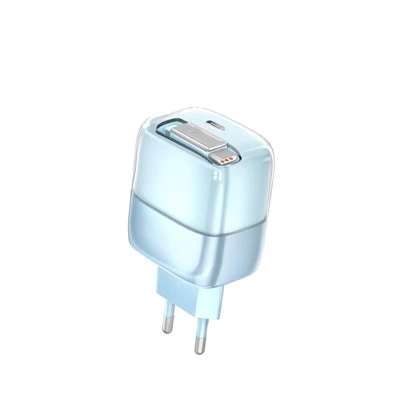
Wait, let’s wrap up with a quick recap so you don’t forget all this. Step 1: Swap with a known good charger + cable to rule out other issues. Step 2: Test the outlet itself—plug something else in. Step 3: Use a basic table lamp to check if the charger outputs power at all. Step 4: For high-power or slow-charging issues, compare charge times to a good charger of the same wattage. Step 5: Do a visual check for damage—frayed wires, bent prongs, cracked casings = time to replace.
Charging Accessories I’ve been doing this long enough to know that chargers are one of those things everyone takes for granted until they don’t work, and suddenly your whole day is ruined. Whether you’re testing an old charger from the back of your junk drawer, a new one you just got in the mail, or a spare you keep in your car, these steps work every single time. If you go through these and still aren’t sure if your charger is working, or you’re in the market for a reliable, long-lasting wall charger that won’t die on you mid-commute, feel free to reach out to us to chat about your needs—we can help you pick the right one for your phone, laptop, tablet, whatever you’ve got. No pressure, just honest advice from someone who’s been in this game for years.
References
- Federal Trade Commission. (2022). Avoiding Electrical Hazards: What to Know About Charging Devices.
- International Electrotechnical Commission. (2021). Safety Requirements for External Power Supplies for Information Technology Equipment.
- Consumer Reports. (2023). How to Test a Dead Phone Charger and Avoid Buying a Lemon.
- Battery University. (2022). The Impact of Inconsistent Charger Output on Lithium-Ion Battery Lifespan.
Shenzhen Xierun Electronics Co., Ltd.
Shenzhen Xierun Electronics Co., Ltd. is one of the most professional wall chargers manufacturers and suppliers in China. With abundant experience, we warmly welcome you to wholesale the newest wall chargers made in China here from our factory. We also accept customized orders.
Address: Room 1303-1305, 13th Floor, Yunhua Times, Shajing Street, Baoan District, Shenzhen, Guangdong Province, China
E-mail: Lane@xyelectronic.com
WebSite: https://www.xierunelec.com/
