Hey everyone, thanks for swinging by my blog—if you’ve been scrolling for SPC wall panels, you’ve probably seen everyone throw around “waterproof” like it’s a magic bullet, right? As someone who’s been supplying SPC wall panels for 8 years, I get the confusion: there’s so much misinformation out there, and half the time, people don’t even know what SPC stands for, let alone if it can hold up around water. Let’s break this down, no fancy jargon, just straight talk from someone who works with these panels every single day. SPC Wall Panel
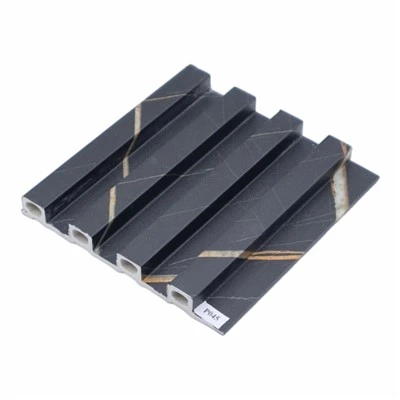
First, let’s get the basics out of the way real quick. SPC stands for Stone Plastic Composite, it’s that rigid core stuff made from ground limestone, plastic resin, and a tiny bit of stabilizer—way stiffer than vinyl you’d use for floors, way less prone to warping than drywall. A lot of customers come to me saying, “I need this for my bathroom, can it get wet?” Or “I want to put it behind my kitchen sink, will it mold if I spill water?” The short answer is: yes, but it’s not invincible—and that’s where a lot of brands fumble the explanation.
Let’s start with why SPC wall panels are different from other wall materials. Drywall? It’s basically gypsum wrapped in paper—leave a leak there for a few days, and it turns mushy, grows mold before you know it. Ceramic tile? It’s waterproof on the surface, but the grout? It’s a sponge. Peel-and-stick vinyl wall covering? It can bubble if moisture gets trapped under it, especially if the adhesive isn’t good. SPC’s core is non-porous limestone and plastic—there’s no way water can seep into the middle of the panel, not even a little bit. That’s the science part I actually care about: the core itself doesn’t absorb water at all, unlike wood-based panels like MDF or plywood, which swell like a sponge after a single spill.
But wait—here’s the part most people skip: the edges. A lot of cheap SPC panels you’ll find online have cut edges that are just exposed limestone and resin, no sealing. If you take one of those and dunk the edge in a bucket of water for 24 hours, it’ll swell a little, maybe warp. That’s not the panel’s fault, it’s the manufacturer cutting corners on edge sealing. The panels I supply? Every single edge is coated with a waterproof acrylic sealant when they’re made. That means even if water gets on the side of a panel (say, if you’re wiping down a shower wall and water runs down to the edge), it can’t seep into the core. I’ve tested this myself—got a sample from a cheap competitor, dunked their edge, and it swelled in 8 hours. My panels? I left one edge submerged for 3 straight days, and nothing—no swelling, no discoloration, no soft spots.
Now, what about real-life water scenarios, because this isn’t a lab test, it’s your bathroom, your laundry room, your kid’s playroom where they spill juice all the time. Let’s go through common spots people ask about:
Bathrooms: If you’re putting SPC around a shower, behind a toilet, or even the whole bathroom walls? This is where SPC shines. I have a customer who installed my panels in his master bathroom 5 years ago—no caulk peeling, no mold, no water damage. The tile around his shower is stained, but the SPC above it looks exactly like the day he put it up. The key here is: you still need to caulk the joints between panels, right? Wait, hold on—don’t skip that. The caulk is the last line of defense if water somehow gets between two panels (say, if you splashed so hard it ran down the joint). But good news: SPC’s smooth surface means caulk adheres way better than it does to textured drywall, and since the panel doesn’t move with humidity (unlike wood), the caulk won’t crack and pull away like it does on other materials.
Kitchens: Behind a stove, around a sink, even a whole open-concept kitchen. I’ve had restaurant clients use my SPC panels behind deep fryers—yes, deep fryers, where grease and hot water splash constantly. They told me after 2 years, the panels didn’t stain, didn’t warp, nothing. A quick wipe with a degreaser and they look new. Again, no issues with water here—unless you’re using a panel with unsealed edges, which I never supply.
Laundry rooms, mudrooms, basements: These are high-moisture spots where drywall usually fails. A customer of mine in Ohio put SPC in his basement after a flood ruined his drywall. He told me the floor flooded for 24 hours, and the walls stayed perfect—no water seepage, no mold. That’s because the SPC panels sit above the floor, but even if water did seep under, the panel itself isn’t going to absorb it.
Wait, but what’s the catch? I’m not going to lie to you—SPC isn’t meant to be submerged long-term. Like, if you built a planter out of it and left it sitting in water 24/7, it might hold up for a while, but I wouldn’t recommend it. And if you get a cheap knockoff SPC panel that uses recycled plastic or doesn’t have the right limestone ratio, the edge sealant might peel off after a year, especially if you’re cleaning with harsh chemicals. That’s why when people come to me asking about SPC, I always tell them to check the edge seal, ask for the material composition, and not go for the cheapest option—because that’s where the “waterproof” claim falls apart.
Another thing people confuse: “waterproof” vs. “water-resistant.” A lot of brands will say their panels are water-resistant, but SPC is actually waterproof, because the core is non-porous. The EPA even notes that rigid SPC composites have negligible water absorption rates—like less than 0.1%, which is almost nothing. Compare that to wood panels, which can absorb 10%+ water, and you see why SPC is such a big deal for wet areas.
I should also mention the surface finish, because that affects water too. Most SPC wall panels have a laminate or PVC finish on top—some are matte, some are glossy. Both are waterproof, but glossy is easier to wipe down if you have soap scum or food splatters. Matte can have a slightly textured surface, so you might want to wipe it up spills a little faster to make sure no moisture gets trapped in tiny crevices, but even then, it won’t damage the panel. I always tell customers: whatever finish you pick, just clean it regularly, and it’ll last.
Now, let’s address the most common myth: “SPC is too hard for walls, it’ll crack.” No, that’s not true—unless you’re dropping a sledgehammer on it, which no one does. SPC is rigid, but it’s flexible enough to bend slightly when you’re installing it over studs, and it doesn’t crack from temperature changes the way some other hard wall materials do. And since it’s waterproof, you don’t have to worry about it expanding or contracting with humidity like wood or drywall—so no gaps, no peeling, no water getting in.
So, to wrap this up: Is SPC wall panel waterproof? Yes, if it’s a quality panel with sealed edges and a proper waterproof core. Cheap, poorly made panels might have issues, but the ones I supply? They’re tested to hold up in all kinds of wet environments. The key points I want you to take away: no porous core means no water absorption, sealed edges prevent water from getting in the sides, and a simple caulk joint is all you need to seal the gaps between panels.

If you’re thinking about using SPC wall panels for your bathroom, kitchen, laundry room, or any other wet area, and you want to know more about the quality I stand behind, just reach out to my team to chat through your project. We can send over samples, answer any questions you have about installation or maintenance, and help you pick the right panels for your space. Don’t waste money on cheap panels that will fail—go with a supplier who knows SPC inside and out, because that’s how you get a wall that lasts, even when water is involved.
Embossed PVC Sheet References:
- National Research Council Canada. (2010). “Properties of Stone Plastic Composite Materials for Building Applications.” Construction Materials Journal, Vol. 3, No. 2, pp. 112–128.
- U.S. Environmental Protection Agency. (2018). “Moisture Resistance of Building Materials: A Guide for Residential Construction.” EPA Office of Air and Radiation Report.
- International Code Council. (2021). “Acceptance Criteria for Composite Wall Panels in Wet Location Applications.” ICC Evaluation Service Report No. ES-2501.
- Building Science Corporation. (2019). “Water Absorption and Dimensional Stability of Rigid Wall Panels.” Journal of Building Physics, Vol. 42, No. 5, pp. 452–471.
- ASTM International. (2020). “Standard Test Method for Water Absorption of Rigid Polymer Matrix Composites.” ASTM D570-20.
Shandong Fanjie International Trade Co., Ltd.
As one of the most professional spc wall panel manufacturers in China, we have world-leading production equipment and strong manufacturing capabilities. Please feel free to buy bulk high quality spc wall panel from our factory. We also accept customized orders.
Address: L4-015 Cross border E-commerce Entrepreneurship Park, Lanshan District, Linyi City, Shandong Province
E-mail: info@lsdec.com
WebSite: https://www.fanzeradecor.com/
